In industries where performance and reliability are non-negotiable, precision manufacturing is everything. Whether producing aerospace components, medical devices, defense systems, or consumer products, manufacturers are under constant pressure to deliver exceptional accuracy, stable throughput, and tight process control.
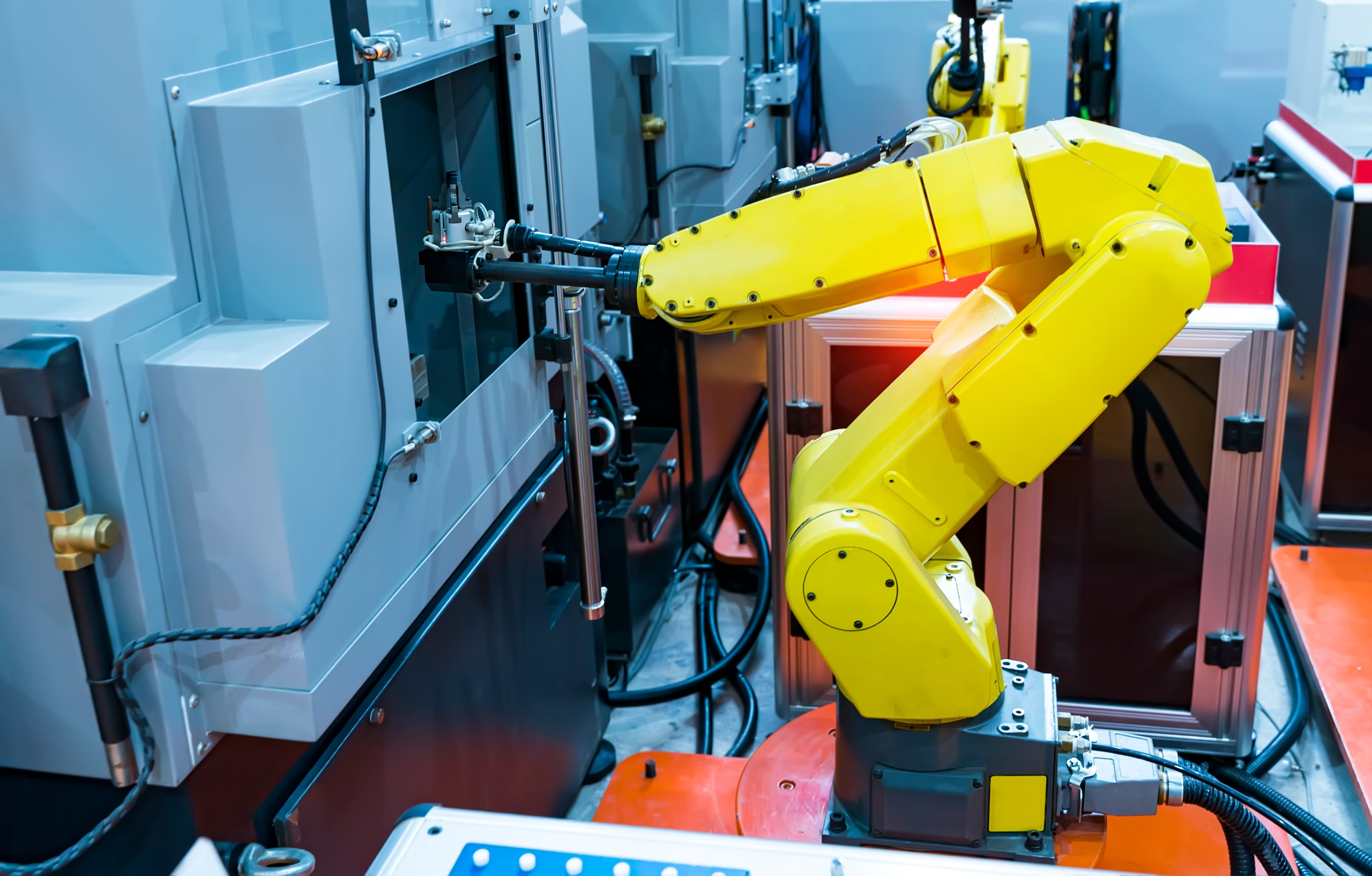
Robotic integration helps achieve these goals—removing variability, improving consistency, and enabling predictable quality at scale. As demand for precision and shorter lead times grows, automation has become an essential part of delivering quality without compromise.
Why Robotics Matter in High-Accuracy Manufacturing
Precision components often feature complex geometries, small-scale features, and material requirements that leave no room for variation. Even minor inconsistencies can affect fit, performance, or functional reliability. Robotic automation stabilizes production by eliminating human variability in repetitive tasks, ensuring each part is produced under identical, controlled conditions.
This level of consistency is difficult to achieve with manual loading alone—especially in medium- and high-volume runs.
(Industries like optics and firearms are prime examples, where small components, high precision, and production volume make robotic loading and inspection especially valuable.)
Repeatability That Protects Quality
Robots excel at performing precise, repetitive movements. For tight-tolerance parts—such as housings, mounts, slides, or intricate internal components—consistent positioning reduces scrap, improves surface finishes, and supports narrow process windows.
When parts load and unload identically every cycle, machining accuracy and repeatability naturally improve, while downtime from fatigue or handling variation is minimized.
Improved Throughput and Responsiveness
Automation keeps production flowing efficiently, even as job priorities shift. Robots can run continuous cycles without breaks, allowing manufacturers to increase throughput during high-demand periods or product launches.
In competitive sectors where responsiveness matters, robotic systems enable extended or unattended shifts—boosting output without adding labor hours or compromising quality.
Better Process Control Across Regulated Sectors
Industries that operate under strict quality or regulatory standards—such as aerospace, defense, optics, and medical manufacturing—benefit greatly from robotic integration. Automation strengthens process control by:
- Reducing variation from cycle to cycle
- Establishing stable, repeatable workflows
- Supporting traceability and documentation
- Ensuring consistency across serialized parts
The result is a more controlled and predictable manufacturing environment—critical when verification and compliance are key.
Designed for the Future of Precision Manufacturing
Automation isn’t replacing skilled machinists—it’s enhancing their capabilities. Robots handle the repetitive motion and material handling, while machinists focus on setups, optimization, and process improvement.
For any industry that values precision, reliability, and efficiency, this collaboration between people and automation represents the future of advanced manufacturing.
Looking to Strengthen Quality and Throughput?
VertX Manufacturing integrates advanced machining and automation to deliver reliable, consistent results across precision-driven industries.
If you’re ready to improve accuracy, reduce variation, or expand capacity, reach out to our team to discuss how automated workflows can support your next program.